QZBrain Journal
How to build a daily brain training routine that actually sticks
The best brain training routine is not the longest one. It is the one you can repeat when your day is busy, your energy is uneven, and motivation is ordinary. QZBrain is built around that idea: a few focused minutes, clear feedback, and games that adapt instead of demanding a perfect streak.
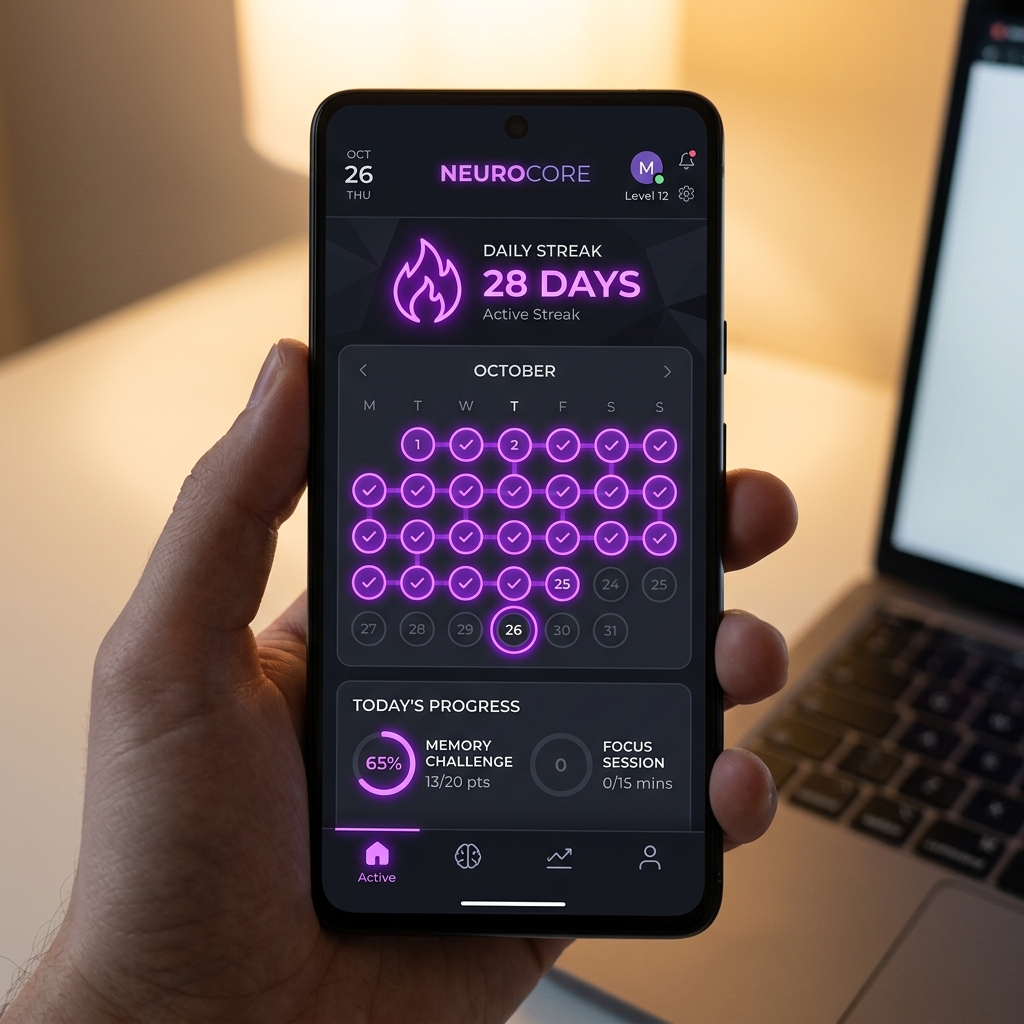
Start small enough that you do not negotiate
A useful routine should feel almost too easy to begin. Set a fixed cue, such as after coffee, after lunch, or before reading at night. Then do one short session. The goal is not to prove discipline; the goal is to remove the daily decision.
Short sessions also keep practice clean. Working memory, attention, and processing speed all suffer when training becomes tired button-pressing. Stop while the session still feels crisp, then come back tomorrow.
Keep comparisons like-for-like: repeat the same game at a similar time and in a similar setting. A result from another game—or a very different context—is not a fair comparison.
How to track the routine
Choose a schedule you can repeat. Record completed sessions and compare your accuracy and response time over several weeks.
Train with QZBrain
QZBrain includes adaptive memory and attention games, puzzles, daily workouts, and clear per-game results. Start your practice →
Frequently asked questions
How long should a daily brain training session be?
For most people, a few focused minutes is enough to build consistency. Longer sessions are less useful if attention drops.
Should I train every day?
Daily practice can help the habit become automatic, but missing a day is normal. Resume with a short session instead of trying to make up for it.
QZBrain is a general wellness and brain-training product for everyday cognitive exercise and entertainment. This article is general information, not medical advice, and is not intended to diagnose, treat, cure, or prevent any condition.